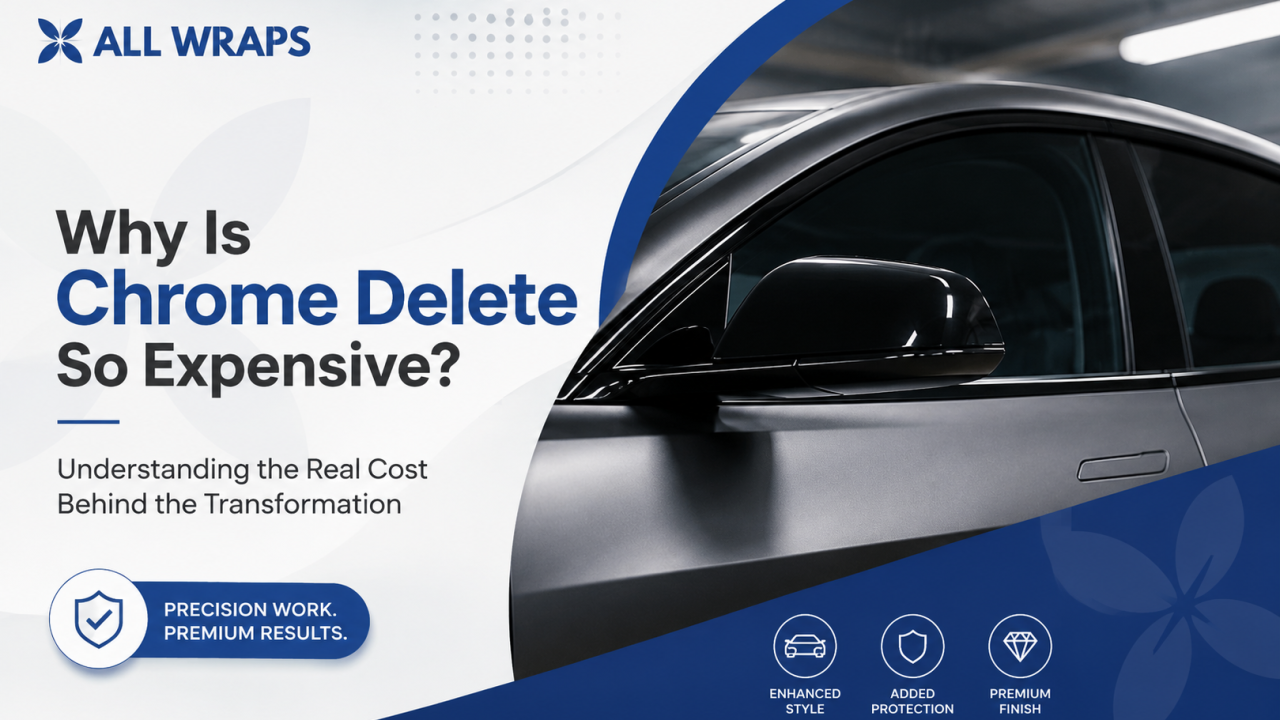
Chrome delete has become one of the most popular vehicle styling upgrades in recent years. From Teslas and BMWs to Mercedes-Benz and Range Rovers, many vehicle owners choose chrome delete to achieve a cleaner, more modern appearance.
However, one question comes up frequently:
Why does chrome delete cost so much when it only covers a few trim pieces?
The answer is simple: while the amount of vinyl used is relatively small, the installation process is extremely labor-intensive and requires significant skill to achieve a factory-quality finish. Professional installers often spend hours wrapping intricate chrome components that most people overlook.
What Is a Chrome Delete?
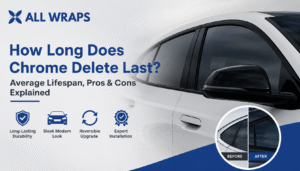
A chrome delete involves covering factory chrome trim with premium vinyl film, typically in:
- Gloss Black
- Satin Black
- Matte Black
- Color-Matched Finishes
Common chrome delete areas include:
- Window trim
- Door handles
- Front grille accents
- Roof rails
- Bumper trim
- Tailgate trim
The goal is to eliminate bright chrome elements and create a more aggressive, luxury, or sporty appearance.
The Biggest Reason: Labor Costs
Unlike a large flat panel on a vehicle wrap, chrome trim is usually:
- Thin
- Curved
- Irregularly shaped
- Located near delicate paint surfaces
Each section must be wrapped individually.
Professional installers must:
- Thoroughly clean the trim.
- Measure and cut vinyl precisely.
- Stretch vinyl around curves.
- Tuck edges invisibly.
- Heat-finish the material for durability.
A single window trim section can take far longer than most people expect. On luxury SUVs, chrome delete installations may require a full day or more of labor.
Chrome Delete Cost Breakdown
| Cost Factor | Impact on Price |
|---|---|
| Vehicle Size | Larger vehicles have more trim |
| Chrome Quantity | More chrome = more labor |
| Trim Complexity | Curves and corners increase installation time |
| Grille Design | Intricate grilles require precision work |
| Roof Rails | Difficult access adds labor |
| Installer Experience | Higher-quality work costs more |
Typical Chrome Delete Pricing
| Vehicle Type | Average Cost |
| Tesla Model 3/Y | $500 – $700 |
| Mid-Size Sedans | $700 – $1,000 |
| BMW, Audi, Mercedes | $900 – $1,500 |
| Range Rover, Escalade | $1,500 – $1,900 |
Pricing varies depending on vehicle design and the amount of chrome being wrapped.
Complex Vehicles Require More Time
Many luxury vehicles have extensive chrome accents.
Examples include:
Mercedes-Benz
Chrome surrounds windows, grilles, bumpers, and door handles.
Range Rover
Features multiple chrome strips, trim pieces, and roof rail components.
Cadillac Escalade
Large grilles and numerous chrome accents dramatically increase installation time.
These vehicles often require significantly more labor than a Tesla or standard sedan.
Material Quality Matters
Professional chrome delete services use automotive-grade vinyl from trusted manufacturers.
Premium films provide:
- Better durability
- Stronger adhesive performance
- Cleaner finishes
- Longer lifespan
- Easier removal without damage
Cheap materials may fail prematurely, peel at edges, or discolor after exposure to sun and weather.
Why DIY Chrome Delete Often Fails
Many people assume chrome delete is an easy weekend project.
Unfortunately, chrome trim is one of the most difficult vinyl applications on a vehicle.
DIY installers often struggle with:
- Bubbles
- Wrinkles
- Visible seams
- Lifting corners
- Uneven edges
Professional shops use specialized tools, installation techniques, and heat-finishing methods to ensure long-term durability.
Is Chrome Delete Worth the Cost?
For most vehicle owners, the answer is yes.
Chrome delete delivers one of the highest visual transformations per dollar spent.
Benefits include:
- Modern appearance
- Sportier styling
- Enhanced vehicle aesthetics
- Better integration with black wheels and window tint
- Protection for factory chrome trim
Compared to repainting trim or replacing components, chrome delete remains one of the most cost-effective styling upgrades available.
Final Thoughts
Chrome delete may seem expensive at first glance, but the price reflects the skill, precision, and labor required to achieve a flawless finish. The materials represent only a small portion of the total cost. What you’re truly paying for is professional craftsmanship, attention to detail, and a transformation that dramatically improves your vehicle’s appearance.